
Drama
One Flew Over the Cuckoo's Nest
1975 · Miloš Forman
“A rebel fakes insanity to avoid prison work and starts a war of nerves with the ward's quiet tyrant.”
The central question
What is this film about?
At its core, "One Flew Over the Cuckoo's Nest" is a powerful allegory for the individual's struggle against oppressive, soul-crushing systems. R.P. McMurphy is not just a convict feigning madness; he is a force of chaotic, life-affirming energy, a counter-cultural Christ figure challenging the sterile, dehumanizing order of the ward. Nurse Ratched embodies this system—calm, implacable, and armed with rules, passive aggression, and medical authority. The film argues that true sanity lies in the freedom to be oneself, even if that self is loud, disruptive, and defiant. McMurphy’s rebellion, therefore, is a fight for the very soul of his fellow patients.
Miloš Forman’s quasi-documentary style masterfully expresses this conflict. By shooting in a real mental hospital and using its actual patients as extras, he grounds the allegory in a stark, uncomfortable reality. The film’s form mirrors its theme: static, symmetrical compositions and flat fluorescent lighting dominate the group therapy sessions, visually trapping the men. In contrast, the camera becomes liberated and fluid during the fishing trip, capturing the elation of temporary freedom. The constant focus on the other patients' reactions is key, as we witness McMurphy’s spirit igniting their long-dormant humanity, making them the true subject of the film.
A common misreading is to view the film simply as a heroic sane man's tragic fight against a singular, monstrous villain. This interpretation flattens the narrative into a simple good-versus-evil story, overlooking the systemic critique. Nurse Ratched is not merely a sadist; she is a functionary who genuinely believes her methods create order and help patients. She represents the insidious nature of institutional power that doesn't require malice, only conformity. McMurphy is also not a simple hero; he is a selfish, impulsive criminal whose heroic actions are often accidental byproducts of his own desires.
A quieter, more profound reading posits that the film is not McMurphy's story at all, but Chief Bromden's. From this perspective, McMurphy is the catalyst, but the true narrative arc is the Chief's journey from catatonic silence to consciousness and, ultimately, freedom. McMurphy's struggle awakens the Chief, teaching him to reclaim his own strength. The final act—the mercy killing and the escape—completes this transference of spirit. McMurphy, the supposed sane man, is destroyed by the system, while the Chief, deemed insane, achieves the true, transcendent liberation his friend's sacrifice made possible.
Editorial reading
Written by the FilmAbouts editors. It is one reading among many — the community decides how convincing it is.
Do you agree?
0% agree · 100% disagree
Visual language
Symbols & visual language
Recurring elements, where they appear, and what they might mean.
The Water Fountain (Hydrotherapy Console)
Represents
The immovable power of the institution
Where it appears
Throughout the film in the tub room.
McMurphy's failed attempt to lift it is a bold but futile gesture against the system. The Chief's success in lifting it at the end shows he has absorbed McMurphy's spiritual strength and can now break the bonds of the institution.
Cigarettes
Represents
Currency, small freedoms, and control
Where it appears
Constantly being gambled, rationed, and confiscated.
Cigarettes form the basis of the patients' micro-economy, a small pocket of autonomy that McMurphy exploits. Nurse Ratched's power to ration and confiscate them demonstrates her method of control through petty, condescending rules.
The Fishing Boat ('The Nunya')
Represents
Temporary freedom and reclaimed masculinity
Where it appears
During the unauthorized fishing trip.
On the water, away from the ward's emasculating environment, the men are loud, joyful, and capable. It's a fleeting moment where they escape their 'patient' identity and reconnect with a sense of self-worth and wildness.
The World Series Game
Represents
The desire for connection to the outside world
Where it appears
During the group vote and McMurphy's imaginary broadcast.
Ratched's refusal to allow a schedule change for the game symbolizes the institution's denial of simple human pleasures. McMurphy's manic, imaginary play-by-play is a pure act of internal rebellion, proving the spirit can triumph even when the body is confined.
Cinematography
How the film looks
Institutional White · Medical Blue · Dreary Grey · Muted Green · Faded Red
The film's palette is dominated by desaturated, clinical blues, greys, and whites, reflecting the sterile and emotionally suppressed atmosphere of the hospital. These colors are only broken by the fleeting warmth of skin tones and the vibrant chaos of the world outside the ward.
- Dominant colours
- Desaturated blues, institutional whites, greys, and pale greens.
- Lighting
- Often flat, fluorescent, and harsh inside the institution, creating a sterile, shadowless environment. Contrasted with natural, softer light during the fishing trip.
- Camera
- A mix of static, observational shots (group therapy) and more fluid, handheld work that follows McMurphy's chaotic energy. Heavy reliance on reaction shots.
- Composition
- Symmetrical and ordered compositions for scenes controlled by Ratched. Group shots emphasize the collective's submission or burgeoning rebellion.
- Aspect ratio
- 1.85:1
- Production design
- Authentic and minimalist. Filmed in a real, functioning mental hospital (Oregon State Hospital), using its actual architecture and decor to create a sense of oppressive realism.
- Recurring pattern
- The circle. The group therapy sessions are always in a circle, symbolizing both community and entrapment, a feedback loop of institutional power.
- Evolution
- The film's visual style starts as rigid and controlled, mirroring the ward's routine. As McMurphy's influence grows, the camera becomes more mobile and subjective, culminating in the free-wheeling energy of the fishing trip before snapping back to stark confinement.
Lineage
What inspired the film?
Films, books, real events and culture that feed into it.
Book
One Flew Over the Cuckoo's Nest (Ken Kesey, 1962)
The film is adapted from Kesey's novel, but crucially shifts the narrative perspective from Chief Bromden's internal monologue to a more objective, external viewpoint.
Culture
The Counterculture of the 1960s
The film channels the anti-establishment, anti-authoritarian spirit of the 60s, framing McMurphy as a flawed hero for a generation skeptical of institutions and conformity.
Film
Titicut Follies (Frederick Wiseman, 1967)
Wiseman's landmark documentary exposed the horrifying and dehumanizing conditions in a Massachusetts hospital for the criminally insane, providing a real-world basis for the film's critique.
Film
Cool Hand Luke (1967)
Features a similar charismatic, anti-authoritarian protagonist who becomes a symbol of hope for his fellow inmates while rebelling against a rigid, enclosed system, ultimately paying the price.
Real event
The Stanford Prison Experiment (1971)
The film's depiction of how individuals adopt and are shaped by their assigned roles (nurse/patient, guard/prisoner) mirrors the findings of Zimbardo's famous psychological study.
Connections
If you liked this film...

A Clockwork Orange
A charismatic anti-hero is subjected to psychological conditioning by a dystopian state in a searing critique of free will and social control.

The Shawshank Redemption
Another classic film about the enduring power of hope, friendship, and rebellion within a brutal, seemingly inescapable institutional setting.
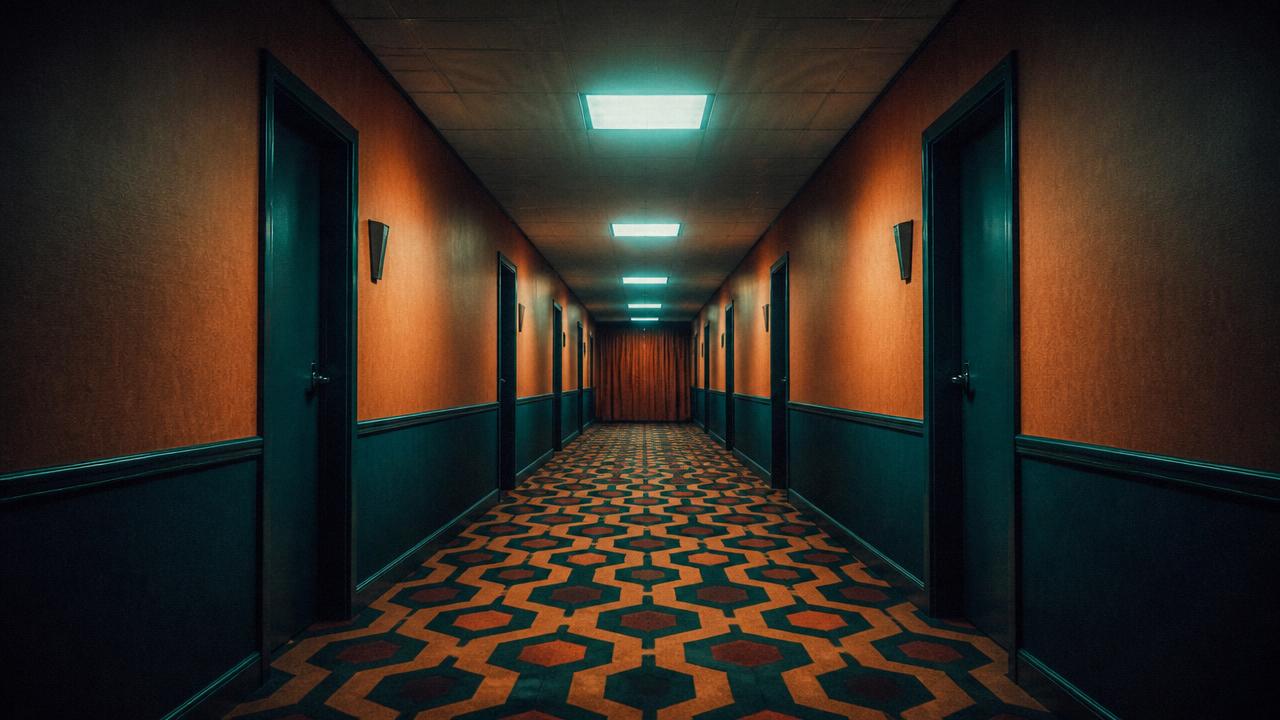
The Shining
Also features a towering Jack Nicholson performance about a man's descent into madness within a claustrophobic, isolated location that becomes a character itself.
Films that influenced this film
- Titicut Follies (1967)
- Cool Hand Luke (1967)
- The Great Escape (1963)
Films influenced by this film
- The Shawshank Redemption (1994)
- The Green Mile (1999)
- Girl, Interrupted (1999)
Music
Soundtrack
Main Title (One Flew Over the Cuckoo's Nest)
Jack Nitzsche
Where it appears
Opening credits, as McMurphy is driven to the hospital.
The eerie theme, played on a musical saw and wine glasses, immediately establishes a sense of mental fragility and unease, contrasting with the serene natural landscape.
Charmaine
Mantovani & His Orchestra
Where it appears
Played constantly as calming muzak within the hospital ward.
This saccharine, insipid easy-listening music represents the bland, pacifying, and soul-crushing atmosphere imposed by Nurse Ratched. It is the auditory equivalent of institutional conformity.
In the Hall of the Mountain King (from Peer Gynt)
Edvard Grieg
Where it appears
A patient, Cheswick, hums it during an agitated state in group therapy.
The piece's famous buildup from quiet tension to a frantic crescendo perfectly mirrors the rising frustration and suppressed mania of the patients under Ratched's psychological pressure.
Jingle Bells
(Traditional, as sung by patients)
Where it appears
During the chaotic Christmas party McMurphy throws in the ward.
The drunken, off-key singing transforms a symbol of wholesome tradition into a moment of bacchanalian chaos and joyous, if temporary, rebellion against the ward's sterile order.
Spoilers ahead
The ending
Spoiler warning
This section reveals the ending and its possible meanings.
Easter eggs
Hidden details
Small discoveries most viewers miss on a first watch.
Real Institution
The film was shot on location at the Oregon State Hospital, a real mental health facility. The hospital's superintendent, Dr. Dean Brooks, played the role of Dr. Spivey, and many actual patients were hired as extras.
Unscripted Therapy
To achieve greater realism, Miloš Forman filmed many of the group therapy sessions by giving Jack Nicholson a general idea and then capturing the genuine, unscripted reactions of the other actors to his provocations.
Ratched's Casting
Before Louise Fletcher was cast, major actresses including Anne Bancroft, Ellen Burstyn, and Angela Lansbury turned down the role of Nurse Ratched, believing the character was too monstrous.
Nicholson's Commitment
Jack Nicholson remained in character for much of the shoot and did not leave the hospital grounds for the first few weeks of filming, even sleeping in one of the rooms to better understand the feeling of confinement.
The debate
Competing interpretations
The goal is not a correct answer — it's finding out which reading people find most convincing.
FilmAbouts interpretation
0%
Community
What do you think the film is about?
Ranked automatically by community agreement.
Log in to add your own interpretation.