The central question
What is this film about?
The Shining is usually described as a story about a hotel that drives a man mad. A more precise reading is that the hotel offers him permission. Jack's cruelty predates the Overlook; the ghosts simply agree with him.
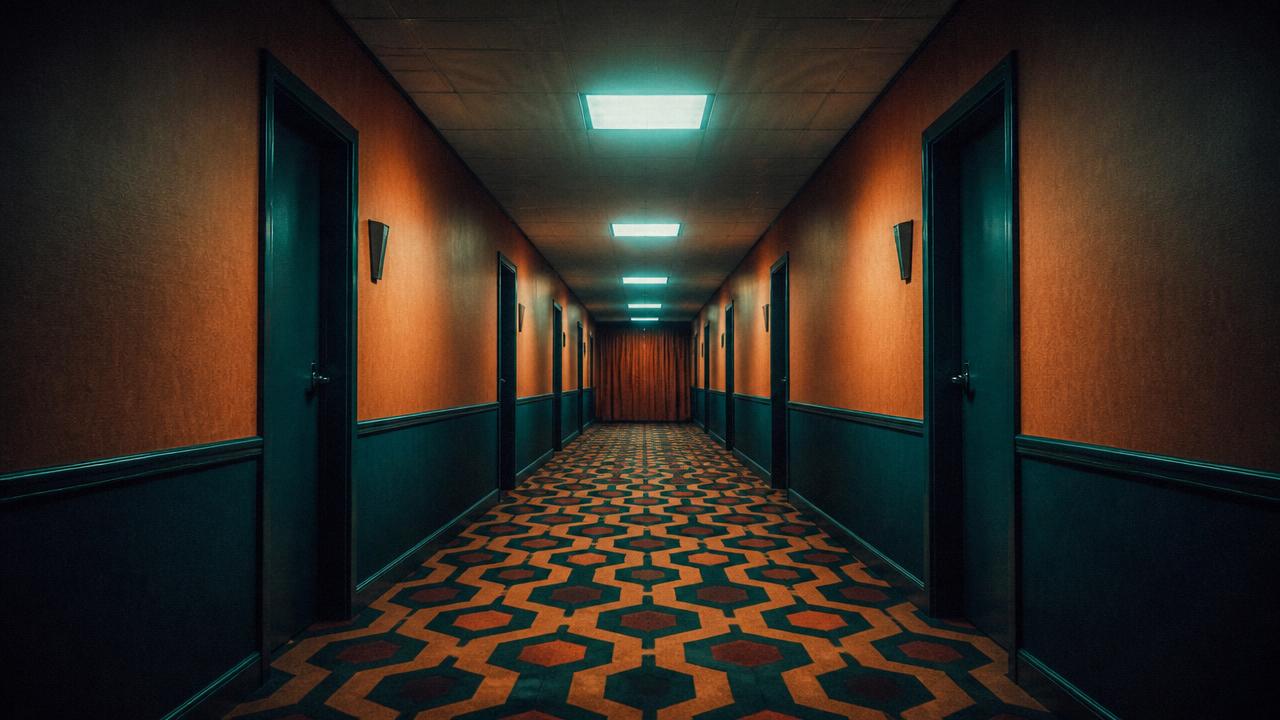
Kubrick's geometry does the argument. Corridors connect to rooms that cannot exist, windows appear in interior walls, furniture relocates between cuts. The audience feels lost before any character does, which is how the film transmits Wendy's experience rather than describing it.
The film also reads as an argument about American history: the hotel is built on a burial ground, the pantry overflows while the family starves emotionally, and the final photograph places Jack inside a party from 1921. Violence is presented as inherited property.
Editorial reading
Written by the FilmAbouts editors. It is one reading among many — the community decides how convincing it is.
Do you agree?
0% agree · 100% disagree
Visual language
Symbols & visual language
Recurring elements, where they appear, and what they might mean.
Mirrors
Represents
Duality, the unreliability of what you see
Where it appears
REDRUM; the bathroom of Room 237
The film's truths are only legible in reverse.
The maze
Represents
A mind with no exit
Where it appears
The model, the grounds, the finale
Jack looks down on the maze like a god and dies inside it like an animal.
Blood elevator
Represents
History that will not stay buried
Where it appears
Danny's visions
Not a warning of what will happen, but a record of what already did.
Native American motifs
Represents
The foundation the building stands on
Where it appears
Carpets, artwork, the manager's dialogue
Prosperity decorated with what it displaced.
Cinematography
How the film looks
Carpet orange · Overlook teal · Blood red · Snow white
Warm hotel interiors against freezing exteriors, with red used almost exclusively for the hotel's memory. The building looks cosy and behaves like a wound.
- Dominant colors
- Orange, teal, red, white
- Lighting
- Flat, even, unnervingly bright for horror
- Camera
- Steadicam at child height; slow symmetrical push-ins
- Composition
- One-point perspective, obsessive symmetry
- Aspect ratio
- 1.85:1
- Production design
- Impossible architecture assembled from real hotels
- Recurring pattern
- Continuity 'errors' that repeat too often to be errors
- Evolution
- Symmetry collapses into handheld chaos in the final act
Lineage
What inspired the film?
Films, books, real events and culture that feed into it.
Book
The Shining — Stephen King (1977)
King famously disliked the adaptation's colder Jack.
Book
'The Masque of the Red Death' — Poe
A party sealed inside while death walks the halls.
Real event
The Donner Party
Named in dialogue; survival cannibalism as the hotel's founding myth.
Culture
American frontier mythology
The film treats settlement itself as the haunting.
Connections
If you liked this film...
Fight Club
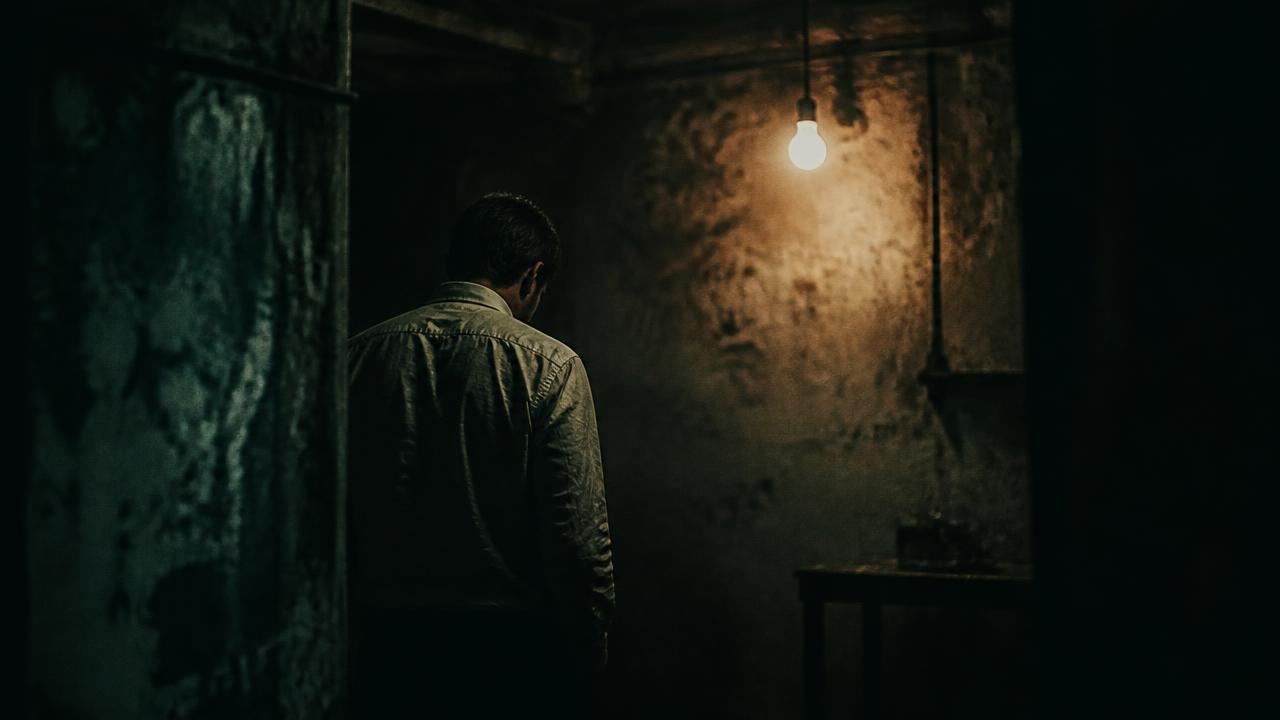
A man narrating his own disintegration as though it were reasonable.
The Matrix
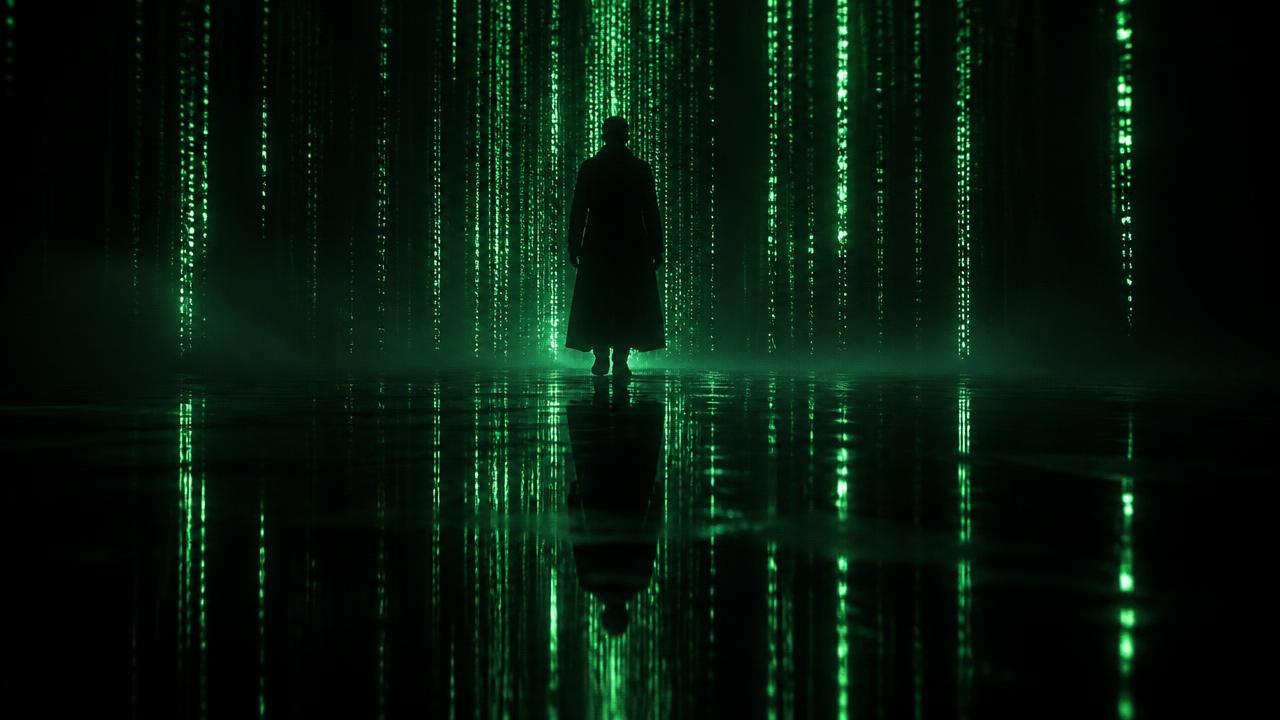
Architecture used as a psychological weapon.
Films that influenced this film
- The Haunting (1963)
- Eraserhead (1977)
Films influenced by this film
- Hereditary (2018)
- Us (2019)
- Stranger Things (2016)
Music
Soundtrack
Dies Irae (Main Title)
Wendy Carlos & Rachel Elkind
Where it appears
Opening aerials
A funeral mass rendered on synthesiser: ancient dread in a modern machine.
Lontano
György Ligeti
Where it appears
Corridor sequences
Micropolyphony that never resolves — sound as architecture.
Midnight, the Stars and You
Ray Noble Orchestra
Where it appears
Final photograph
A 1930s dance tune turns the horror into nostalgia, which is worse.
Spoilers ahead
The ending
Spoiler warning
This section reveals the ending and its possible meanings.
Easter eggs
Hidden details
Small discoveries most viewers miss on a first watch.
The impossible window
Ullman's office has an exterior window in a room surrounded by interior corridors.
Typewriter colour change
Jack's typewriter shifts from cream to blue between scenes.
The chair that vanishes
Behind Jack during a single conversation, a chair disappears mid-scene.
Room 217 to 237
Changed at the request of the hotel that hosted the exteriors.
The debate
Competing interpretations
The goal is not a correct answer — it's finding out which reading people find most convincing.
FilmAbouts interpretation
0%
Community
What do you think the film is about?
Ranked automatically by community agreement.
Log in to add your own interpretation.