
The central question
What is this film about?
At its core, “Star Wars” is a potent political allegory about the cyclical nature of power and rebellion. It translates the archetypal hero's journey into a galactic struggle against a high-tech fascist state. The film posits that even in a universe dominated by overwhelming technological force and bureaucratic evil, hope resides in the individual's choice to fight for a cause greater than oneself. Luke Skywalker’s journey from bored farmhand to galactic hero is not just a personal story but a microcosmic representation of a dormant galaxy reawakening its own spirit of defiance against the sterile, soul-crushing conformity of the Empire.
The film’s form masterfully expresses its themes through the revolutionary “used future” aesthetic. Unlike the pristine spaceships of prior sci-fi, Lucas’s world is grimy, dented, and lived-in, grounding the mythic conflict in a tangible reality. Fast-paced, wipe-heavy editing, borrowed from Kurosawa, gives the film a breathless, serial-like momentum. This is overlaid with John Williams’s unashamedly romantic, leitmotif-driven score, which elevates the dogfights and blaster battles into operatic clashes of destiny. The very look of the film argues that epic struggles are fought not in sterile labs but in the dusty, messy corners of the universe.
A common misreading is that “Star Wars” is merely a simplistic, black-and-white children's adventure. This dismisses the film's deep-seated cynicism about authority, born from the Vietnam and Watergate era. The Empire is not just an evil kingdom; it is a technological and military superpower defeated by a less-equipped, ideologically driven insurgency. While its characters are archetypal, they hint at complexity: Han Solo's cynical materialism is a direct counterpoint to Luke's idealism, and his eventual conversion is a victory for community over self-interest, a nuanced moral argument often lost in discussions of good versus evil.
A quieter, alternative reading views the film as a meditation on faith in a secular, technological age. The Force is not just space magic; it’s a spiritual system demanding a leap of faith that directly opposes an empirical, technology-driven worldview. The climax hinges not on superior piloting skills but on Luke Skywalker turning off his targeting computer to “let go” and trust his intuition. In this light, the film is a Luddite parable, arguing for the supremacy of the human (and Wookiee) spirit over the cold, calculated logic of the machines that threaten to dominate our lives.
Editorial reading
Written by the FilmAbouts editors. It is one reading among many — the community decides how convincing it is.
Do you agree?
0% agree · 100% disagree
Visual language
Symbols & visual language
Recurring elements, where they appear, and what they might mean.
Lightsaber
Represents
An elegant weapon from a more civilized age; the heritage and moral alignment of the wielder.
Where it appears
Obi-Wan Kenobi gives his father's lightsaber to Luke on Tatooine; Luke trains with it and later confronts Vader.
The lightsaber connects Luke to his Jedi lineage and requires skill and discipline, contrasting with the crude randomness of a blaster. It is a symbol of a more noble, spiritual form of power.
The Death Star
Represents
Technological terror, impersonal bureaucracy, and the hubris of fascism.
Where it appears
It is the Empire's ultimate weapon, used to destroy Alderaan and threaten the Rebel base on Yavin IV.
This moon-sized station is the ultimate expression of the Empire's philosophy: the belief that power and fear can create order. Its single, small vulnerability symbolizes the inherent weakness of all seemingly invincible totalitarian systems.
R2-D2
Represents
Hope, resilience, and the importance of overlooked individuals.
Where it appears
Throughout the film, carrying Princess Leia's message and the vital Death Star plans.
As a small, non-verbal droid, R2-D2 is consistently underestimated, yet he is the single most crucial character for the Rebellion's success. He proves that courage and significance are not determined by size, strength, or status.
Twin Suns of Tatooine
Represents
Desire for adventure, the pull of destiny, and the threshold of the unknown.
Where it appears
Luke Skywalker gazes at them wistfully as John Williams's 'Force Theme' plays.
This iconic image captures the essence of Luke's yearning to leave his mundane life behind. The alien nature of two suns marks his world as different, yet his emotion is universal: the longing for a greater purpose that lies just over the horizon.
Cinematography
How the film looks
Tatooine Sand · Imperial Gray · Vader's Shadow · Rebel Orange · Yavin IV Green
The film’s palette visually separates the warring factions, contrasting the organic, sun-bleached earth tones of the heroes' worlds with the sterile, monochrome palette of the Empire. This stark visual dichotomy reinforces the central conflict between natural freedom and oppressive, artificial order.
- Dominant colours
- Earthy browns, tans, and off-whites (Tatooine); sterile greys, blacks, and whites (The Empire); punctuated by vibrant orange (Rebel pilots) and greens (Yavin IV).
- Lighting
- Contrasts the hard, high-key, often top-down lighting of Imperial settings with the softer, more naturalistic light of the Rebel locations. Ben Burtt's sound design is often considered part of the film's 'look'.
- Camera
- A mix of static, wide, tableau-like shots inspired by John Ford and Akira Kurosawa, with kinetic, documentary-style handheld work during battles, influenced by WWII dogfight footage.
- Composition
- Strong geometric lines and deep focus compositions dominate Imperial scenes, emphasizing order and scale. Rebel scenes feature more organic, cluttered, and asymmetrical framing.
- Aspect ratio
- 2.39:1 (Panavision), used to capture epic desert landscapes, sprawling space vistas, and complex action within a single wide frame.
- Production design
- The pioneering 'used future' aesthetic, where technology and environments are dirty, worn, and customized. This grounds the fantasy in a relatable, lived-in reality.
- Recurring pattern
- The use of 'wipe' transitions between scenes, a deliberate homage to Kurosawa's films, which gives the narrative a fast-paced, storybook or comic-panel quality.
- Evolution
- The visual journey moves from the dusty, sun-bleached realism of Tatooine to the cold, geometric, and artificial interiors of the Death Star, and finally to the lush, ancient jungle of Yavin IV, mirroring Luke's own journey from the mundane to the mythic.
Lineage
What inspired the film?
Films, books, real events and culture that feed into it.
Film
The Hidden Fortress (1958)
Lucas directly borrowed the film's narrative device of telling a grand, epic story from the perspective of two bickering, low-status characters (the droids R2-D2 and C-3PO).
Book
The Hero with a Thousand Faces (Joseph Campbell, 1949)
The entire structure of Luke Skywalker's journey, from his 'call to adventure' to his 'supernatural aid,' is a direct and conscious application of Campbell's monomyth theory.
Film
The Dam Busters (1955)
The climactic attack on the Death Star, including the trench run, specific pilot dialogue, and targeting screen visuals, is a near shot-for-shot remake of the final bombing run sequence in this WWII film.
Real event
The Vietnam War (1955-1975)
Lucas has openly stated that the film is an allegory for the war, where a technologically superior empire is defeated by a smaller, determined insurgency fighting on their home turf.
Film
Triumph of the Will (1935)
The final medal ceremony is a deliberate visual recreation of scenes from Leni Riefenstahl's Nazi propaganda film, creating a deeply ironic commentary on the aesthetics of power and victory.
Connections
If you liked this film...

Raiders of the Lost Ark
Both films, masterminded by George Lucas, are exhilarating, high-production-value homages to the adventure serials of the 1930s and 40s, single-handedly revitalizing the genre for a modern era.
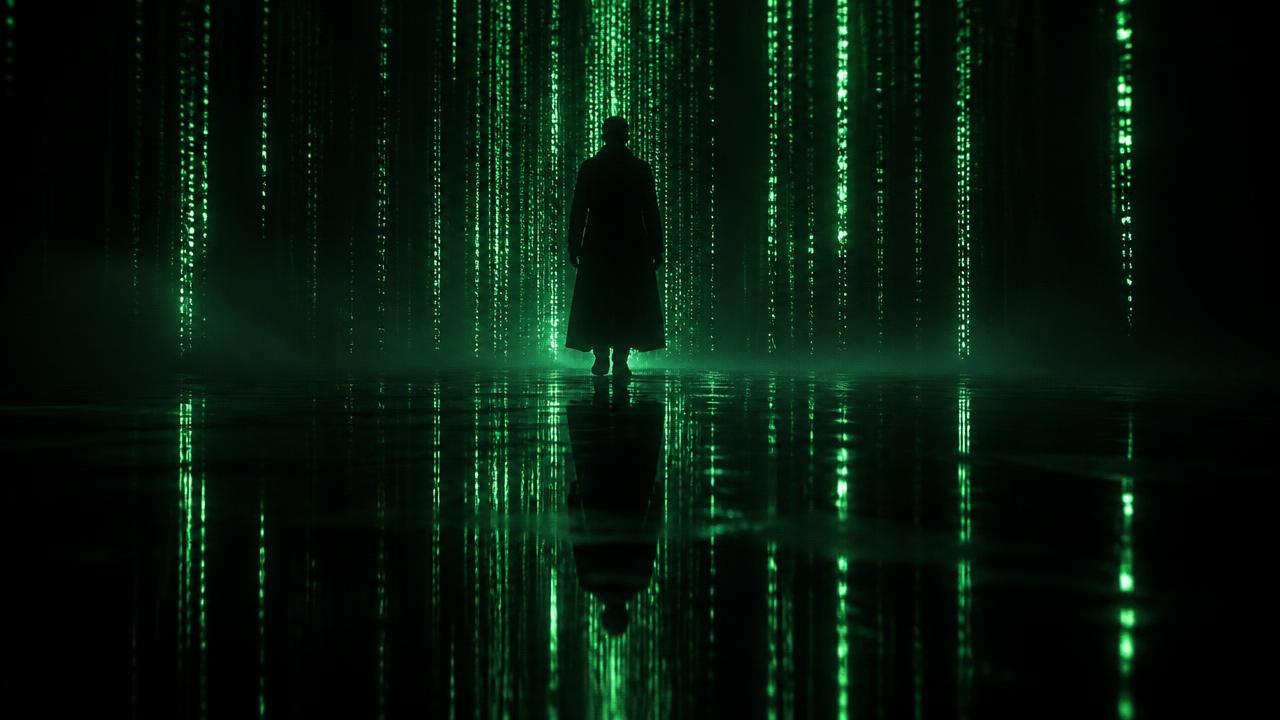
The Matrix
Features a young, unassuming protagonist who discovers his mundane reality is a facade, and is mentored by a wise elder to embrace his hidden destiny as a pivotal figure in a rebellion against an oppressive system.

Jaws
A contemporary 1970s blockbuster that, like Star Wars, redefined the film industry. Both used groundbreaking special effects, an iconic John Williams score, and mythic storytelling to create a visceral, universally appealing cinematic event.
Films that influenced this film
- The Hidden Fortress (1958)
- Flash Gordon (1936 serial)
- The Dam Busters (1955)
Films influenced by this film
- The Matrix (1999)
- Guardians of the Galaxy (2014)
- Avatar (2009)
Music
Soundtrack
Main Title/Rebel Blockade Runner
John Williams
Where it appears
The iconic opening crawl and subsequent space battle.
The heroic fanfare immediately establishes the film's mythic, adventurous tone, a stark contrast to the dominant cynical and subtle films of the 1970s. It told audiences they were watching a modern fairy tale.
The Force Theme (Binary Sunset)
John Williams
Where it appears
As Luke wistfully gazes at the two suns of Tatooine before dinner.
The soaring, melancholic French horn melody perfectly encapsulates youthful yearning, the call of destiny, and the feeling of being stuck in a small town while a bigger world awaits. It's the film's emotional heart.
Cantina Band
John Williams
Where it appears
The diegetic music playing in the Mos Eisley Cantina.
This piece of 'jizz' music, a blend of 1930s swing and Caribbean steel drums, is a masterpiece of world-building, creating a sense of a bizarre, alien, yet recognizable culture in just a few bars.
The Throne Room & End Title
John Williams
Where it appears
The final medal ceremony and the rolling credits.
An unabashedly triumphant, regal march that provides a sense of mythic finality and celebration. Its grandeur confirms for the audience that the characters have ascended from mere adventurers to legendary heroes.
Spoilers ahead
The ending
Spoiler warning
This section reveals the ending and its possible meanings.
Easter eggs
Hidden details
Small discoveries most viewers miss on a first watch.
Tusken Yell
The signature cry of the Tusken Raiders was created by sound designer Ben Burtt. He blended and manipulated recordings of a mule's bray with the shouts of people at a local women's club, creating a unique and unsettling animalistic sound.
Silent Knight
David Prowse, the 6'6" bodybuilder who wore the Darth Vader costume, originally spoke all of Vader's lines on set. However, his thick Bristol accent led Lucas to later dub over his entire performance with the voice of James Earl Jones.
Chewbacca's Inspiration
George Lucas was inspired to create Chewbacca by his own dog, an Alaskan Malamute named Indiana, who would often sit in the passenger seat of his car. The dog's name was later used for another famous Lucasfilm character.
The Krayt Dragon's Second Life
The massive skeleton Luke and C-3PO pass in the desert was not a prop built for the film. It was a real elephant skeleton that the crew found in the Tunisian desert and simply filmed as is, adding to the film's grounded, found-object aesthetic.
The debate
Competing interpretations
The goal is not a correct answer — it's finding out which reading people find most convincing.
FilmAbouts interpretation
0%
Community
What do you think the film is about?
Ranked automatically by community agreement.
Log in to add your own interpretation.