
Drama / Crime
Taxi Driver
1976 · Martin Scorsese
“An insomniac veteran drives through New York's night until his loneliness becomes a mission.”
The central question
What is this film about?
At its core, Taxi Driver is a definitive cinematic document of post-Vietnam urban psychosis. Travis Bickle is not a hero or an anti-hero, but a symptom of a nation suffering from a moral and spiritual crisis. A lonely veteran adrift in the neon-drenched sewer of 1970s New York, he internalizes the city's decay, paranoia, and latent violence. His alienation is so profound that the world registers as a foreign film he watches through his windshield. The film is Paul Schrader and Martin Scorsese's harrowing exploration of what happens when a man, desperate for connection and meaning, finds only corruption and filth, and decides to become a mirror to it.
Scorsese’s direction makes Travis’s fractured psyche palpable. The film’s form is a masterclass in subjective expressionism, pulling the viewer directly into his feverish point of view. Michael Chapman’s cinematography paints the city in sickly neons and oppressive shadows, a landscape both seductive and hellish. The camera often lingers on Travis in isolation or glides slowly through the sordid streets, reflecting his detached observation. Bernard Herrmann’s score, with its juxtaposition of lonely jazz and jarring dissonance, becomes the soundtrack to a disintegrating mind. The famous pan away from Travis’s painful phone call is a key moment, showing his rejection is too pathetic even for the camera to witness.
A common misreading of Taxi Driver is the lionization of Travis Bickle as a righteous vigilante. This interpretation champions his climactic rampage as a necessary cleansing, mistaking the film's unflinching depiction of his mindset for an endorsement of his actions. This view conveniently ignores his blatant racism, his terrifying Madonna-whore complex, and the pathetic, fumbling nature of his attempts at social interaction. The film doesn't present a solution; it diagnoses a sickness. To see Travis as a hero is to fall for the same simplistic, violent logic that he himself succumbs to, ignoring the profound ambiguity and horror at the film's heart.
A quieter, alternative reading views the film as a tragedy of failed communication and toxic performance. Travis is constantly trying on ill-fitting personas: the sensitive intellectual with Betsy, the dutiful son in letters to his parents, the stoic avenger in the mirror. Each interaction is a scripted performance that inevitably fails, leaving him more isolated. His diary entries are a desperate attempt to narrate himself into existence. In this light, the final violent outburst is not just an act of rage, but his ultimate, horrifying attempt to communicate—a bloody spectacle designed to force the world to finally see him when words have failed.
Editorial reading
Written by the FilmAbouts editors. It is one reading among many — the community decides how convincing it is.
Do you agree?
0% agree · 100% disagree
Visual language
Symbols & visual language
Recurring elements, where they appear, and what they might mean.
The Taxi Cab
Represents
Isolation, Purgatory, Detached Observation
Where it appears
Throughout the film, as Travis's workplace and mobile prison.
The cab is Travis's iron coffin, a vessel that allows him to move through the city's veins while keeping him hermetically sealed from any genuine human contact. It is his confessional, his vantage point, and a symbol of his social impotence.
Mirrors
Represents
Fractured Identity, Self-Confrontation, Performance
Where it appears
In his apartment ('You talkin' to me?'), his rearview mirror, and various reflective surfaces.
Travis constantly confronts his own reflection to construct and rehearse an identity. These moments reveal the disconnect between the man he is and the powerful figure he desperately wants to become, culminating in his iconic, solitary performance of aggression.
Water
Represents
Failed Purification, Obscurity, Urban Decay
Where it appears
As perpetual rain on the windshield, steam from manholes, and the water used to wash blood from the streets.
Travis fantasizes about a 'real rain' to cleanse the city, but the film's water is always dirty, obscuring his vision and mixing with the grime. It represents a baptism that can never wash away the sin, a symbol of futile cleansing in a fallen world.
Guns
Represents
Masculine Power, Agency, Violent Expression
Where it appears
During the black market purchase and in his apartment as he trains with them.
For the socially and sexually frustrated Travis, guns become fetishized objects of power. They are a phallic substitute for the agency he lacks, offering a tangible and destructive way to finally make an impact on a world he feels disconnected from.
Cinematography
How the film looks
Neon Red · Sickly Green · Grimy Yellow · Night Blue · Blood Brown
The palette plunges the viewer into Travis's feverish headspace, contrasting lurid, artificial neons against the oppressive darkness of the New York night. The colors are rarely natural or comforting, creating a visual symphony of urban decay and psychological distress.
- Dominant colours
- Saturated reds and sickly greens of neon signs against deep, inky blacks and the grimy yellows of streetlights and cab interiors.
- Lighting
- High-contrast, neo-noir lighting that emphasizes shadows and the wet sheen of the streets. Light sources are often diegetic neons, creating an expressionistic, hellish atmosphere.
- Camera
- Intensely subjective, utilizing slow motion, POV shots from the cab, and unsettlingly intimate close-ups to trap the viewer in Travis's deteriorating psyche.
- Composition
- Frames often isolate Travis against the vast, indifferent city or cram him into claustrophobic interiors. Shallow focus separates him from the blurred, ghost-like figures around him.
- Aspect ratio
- 1.85:1, which Scorsese uses to create both wide, atmospheric shots of the urban landscape and tight, personal frames that amplify Travis's psychological confinement.
- Production design
- A meticulously detailed depiction of 1970s New York at its nadir: garbage-strewn streets, peeling paint, porn theaters, and greasy spoons create a tangible world of physical and moral rot.
- Recurring pattern
- The hypnotic, circular motion of the windshield wipers, endlessly attempting to clear Travis's view but only smearing the grime, symbolizing his futile quest for clarity and purity.
- Evolution
- The visual style grows more distorted as Travis's mental state unravels, culminating in the heavily desaturated, near-monochromatic violence of the final shootout, which feels both brutally realistic and nightmarishly abstract.
Lineage
What inspired the film?
Films, books, real events and culture that feed into it.
Film
The Searchers (John Ford, 1956)
Travis Bickle's character arc mirrors that of Ethan Edwards: a violent, alienated veteran who cannot reintegrate into society and becomes obsessed with 'rescuing' a young woman from a world he deems corrupt.
Book
Notes from Underground (Fyodor Dostoevsky, 1864)
Screenwriter Paul Schrader drew heavily on the novel's existentialist themes and its alienated, spiteful narrator who is intellectually and emotionally divorced from the society he despises.
Real event
The diaries of Arthur Bremer (1972)
Schrader was directly inspired by the diaries of the man who attempted to assassinate presidential candidate George Wallace, channeling Bremer's profound loneliness and desperate craving for notoriety into Travis Bickle.
Film
Le Samouraï (Jean-Pierre Melville, 1967)
The film's depiction of a solitary, ritualistic hitman living by his own austere code heavily influenced Travis's self-styled stoic persona and his meticulously lonely existence.
Culture
Post-Vietnam War Malaise
The film is a direct product of American disillusionment after Vietnam, exploring the psychological trauma of returning veterans who feel abandoned by the country they fought for and alienated from civilian life.
Connections
If you liked this film...

A Clockwork Orange
Features a charismatic but psychopathic protagonist whose shocking acts of 'ultra-violence' serve as a vehicle for a broader critique of societal decay, free will, and state control.
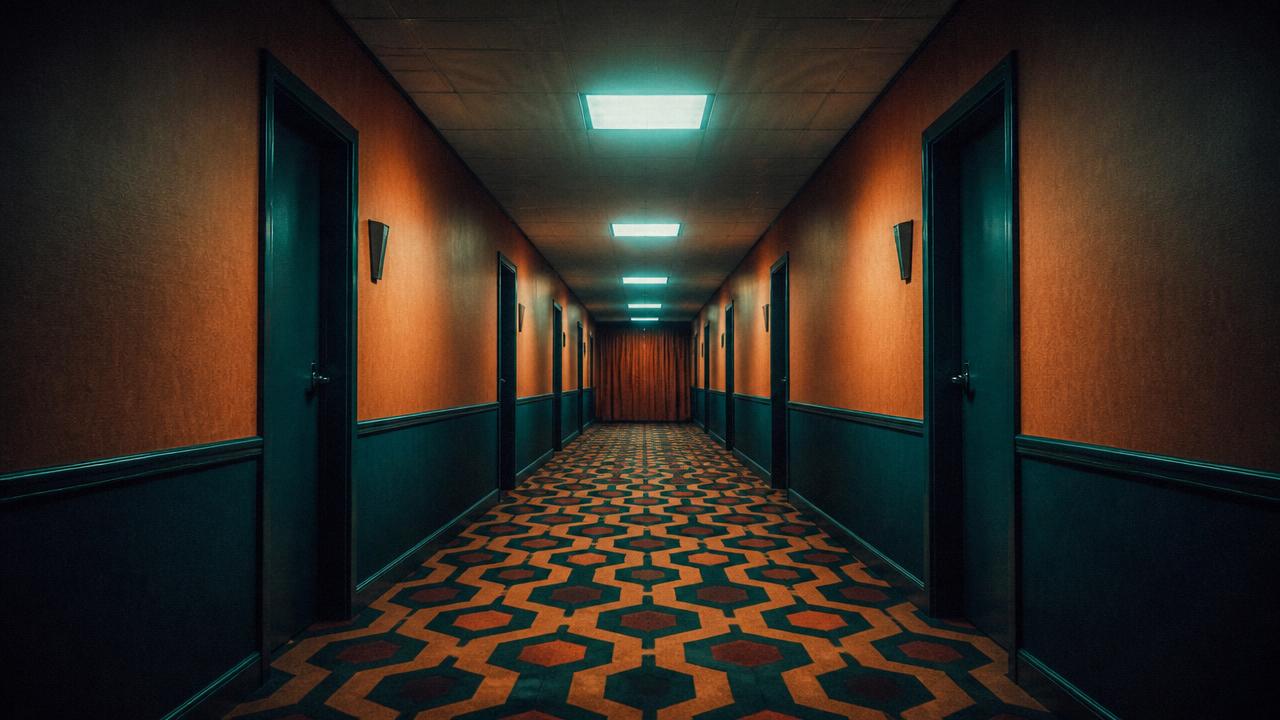
The Shining
An immersive character study of a man's descent into madness fueled by isolation. It uses its claustrophobic setting and subjective filmmaking to blur the lines between psychological breakdown and external forces.
Fight Club
Investigates themes of toxic masculinity, consumerist alienation, and the appeal of violence as a means of self-definition, all through the eyes of a mentally unstable and profoundly unreliable narrator.
Films that influenced this film
- The Searchers (1956)
- Bicycle Thieves (1948)
- Notes from Underground (1864)
Films influenced by this film
- Joker (2019)
- Drive (2011)
- Nightcrawler (2014)
Music
Soundtrack
Main Title
Bernard Herrmann
Where it appears
Opening credits, with motifs recurring throughout.
The score's sultry, melancholic saxophone theme represents Travis's lonely romanticism, while crashing, dissonant brass signifies the violent rage bubbling just beneath the surface of his psyche.
Diary of a Taxi Driver
Bernard Herrmann
Where it appears
During Travis's voiceover narration of his diary.
This tense, repetitive, and unnerving theme, built around a harp and snare drum, sonically mimics Travis's insomnia and spiraling obsession. It is the sound of a mind that cannot rest and is turning in on itself.
The .44 Magnum is a Monster
Bernard Herrmann
Where it appears
As Travis practices with his newly acquired arsenal of guns.
A percussive, militaristic, and menacing cue that transforms Travis's pathetic solitude into a disciplined, dangerous ritual. The music fetishizes the weapons, imbuing them and him with a power he otherwise lacks.
Late for the Sky
Jackson Browne
Where it appears
On the radio as the pimp Sport dances with Iris.
This poignant folk-rock song about a failed relationship provides a deeply ironic counterpoint to the scene's grim reality of exploitation. It highlights the vast chasm between the world of normal love and the sordid transactional reality Iris inhabits.
Spoilers ahead
The ending
Spoiler warning
This section reveals the ending and its possible meanings.
Easter eggs
Hidden details
Small discoveries most viewers miss on a first watch.
Schrader's Method
Screenwriter Paul Schrader wrote the script in roughly ten days while living out of his car, suffering from severe depression after a divorce. He has said he saw the script as a form of personal exorcism, exploring the 'person he was afraid he was becoming'.
The MPAA and the Blood
To avoid a commercially devastating 'X' rating for violence, Scorsese was forced to desaturate the color in the final shootout scene. This made the bright red blood appear darker and browner, a stylistic choice Scorsese later claimed to prefer as it made the sequence more expressionistic.
Scorsese's Cameo
Martin Scorsese plays the passenger who directs Travis to watch his wife's silhouette in an apartment window, graphically describing his intent to kill her. The actor slated for the role was unavailable, so Scorsese stepped in, delivering one of the film's most disturbing monologues.
De Niro's Research
To prepare for the role, Robert De Niro obtained a real cab driver's license and worked 12-hour shifts driving a taxi in New York City for a month. He also studied the diaries of Arthur Bremer and visited US Army bases to study the Midwestern accent and mannerisms of soldiers.
The debate
Competing interpretations
The goal is not a correct answer — it's finding out which reading people find most convincing.
FilmAbouts interpretation
0%
Community
What do you think the film is about?
Ranked automatically by community agreement.
Log in to add your own interpretation.