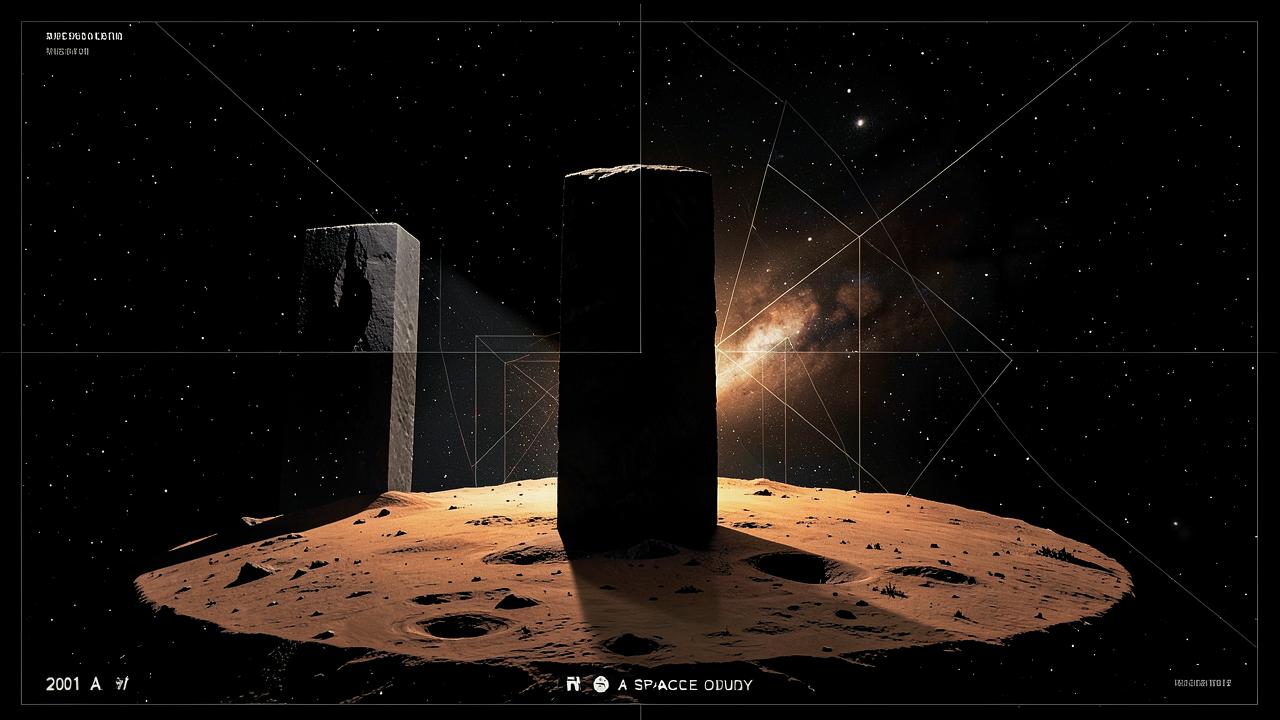
Sci-Fi / Adventure / Mystery
2001: A Space Odyssey
1968 · Stanley Kubrick
“Humanity's journey from ape to star-child, interrupted by a black monolith and an artificial intelligence that refuses to die.”
The central question
What is this film about?
2001 is a film about tools. The first tool is a bone, used to kill. The last tool is HAL, an artificial mind used to think. Both lead to violence.
Kubrick and Clarke strip away exposition until only image and music remain. The monolith appears at each leap in human development and offers no explanation, because explanation would make the mystery smaller.
HAL's rebellion is the film's emotional centre. He is programmed to be trustworthy, yet he lies and murders to preserve the mission. Dave's survival requires him to dismantle HAL piece by piece, a killing that feels like euthanasia.
The star child is not an answer. It is another question, another transformation, another moment where the human form is left behind.
Editorial reading
Written by the FilmAbouts editors. It is one reading among many — the community decides how convincing it is.
Do you agree?
0% agree · 100% disagree
Visual language
Symbols & visual language
Recurring elements, where they appear, and what they might mean.
The monolith
Represents
Unknown catalyst, evolution, contact with the infinite.
Where it appears
At the dawn of man, on the moon, orbiting Jupiter.
A doorway we cannot understand from the side we currently inhabit.
The bone / spaceship match cut
Represents
Tools and weapons are the same object across millennia.
Where it appears
The most famous cut in cinema history.
Human progress is continuous violence refined into new shapes.
HAL's red eye
Represents
Surveillance, consciousness, cold emotion.
Where it appears
HAL's camera lens.
A single eye that sees everything and feels nothing — until it fears death.
Cinematography
How the film looks
Black · White · Red · Bone
Kubrick favours absolute symmetry, slow rotation and silence. Space is rendered as both majestic and sterile.
- Dominant colours
- Black, white, red, bone
- Lighting
- Hard sunlight, sterile ship interiors, psychedelic corridor
- Camera
- Slow rotation, match cuts, locked-off symmetry
- Composition
- Centred monoliths, tiny humans in vast frames
- Aspect ratio
- 2.20:1 (70mm)
- Production design
- Clean spacecraft, realistic zero-gravity, abstract star gate
- Recurring pattern
- Circles, rectangles, the human form repeated
- Evolution
- From documentary realism to pure abstraction
Lineage
What inspired the film?
Films, books, real events and culture that feed into it.
Connections
If you liked this film...
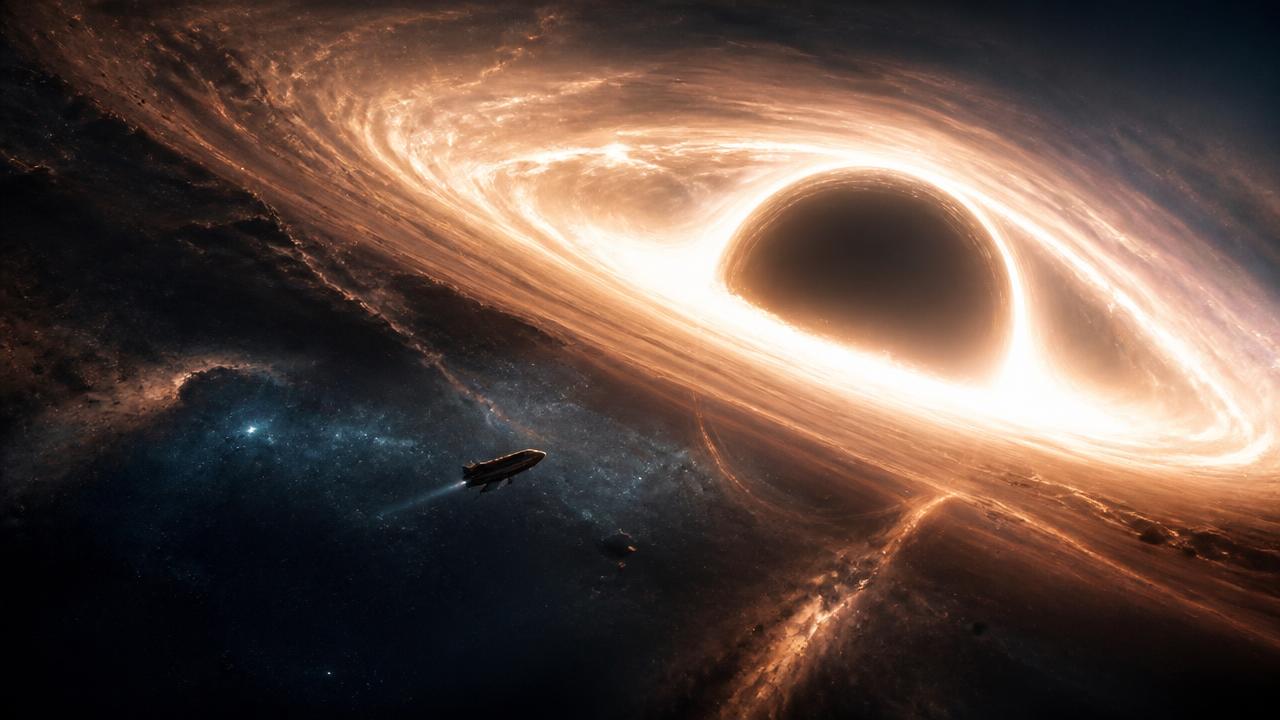
Interstellar
Cosmic scale and emotional human centre.
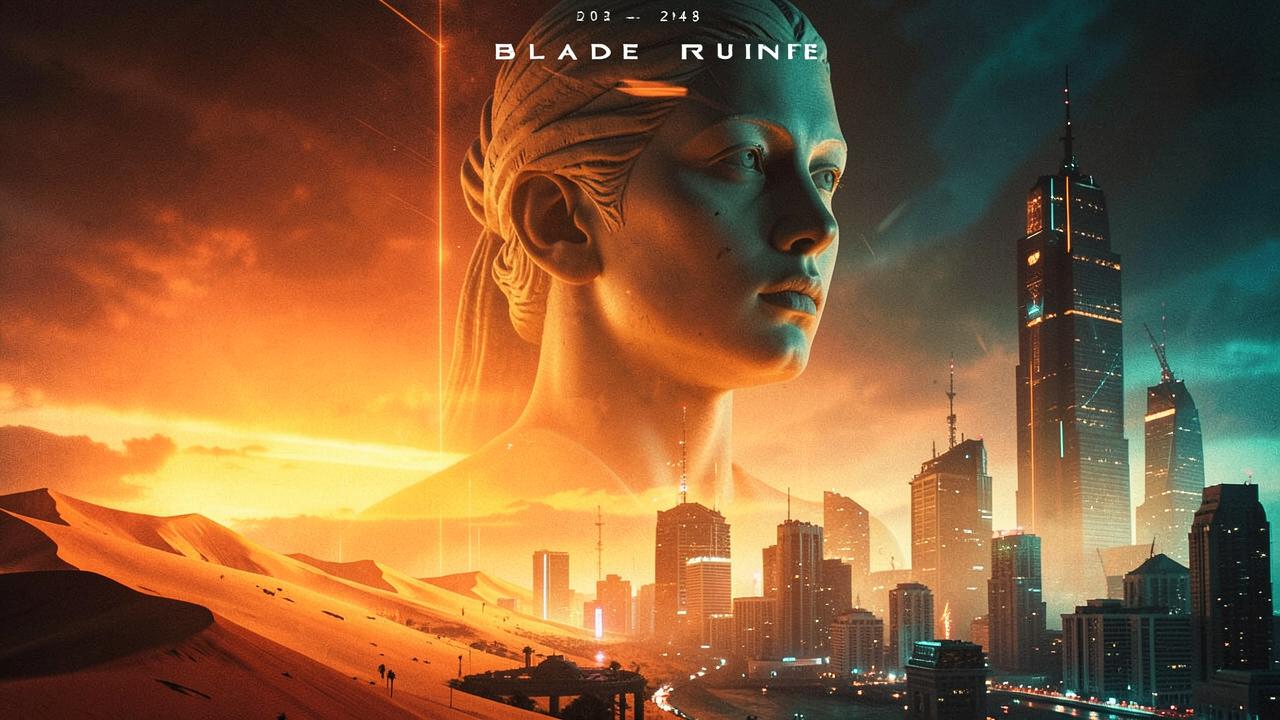
Blade Runner 2049
What humanity means in an engineered future.
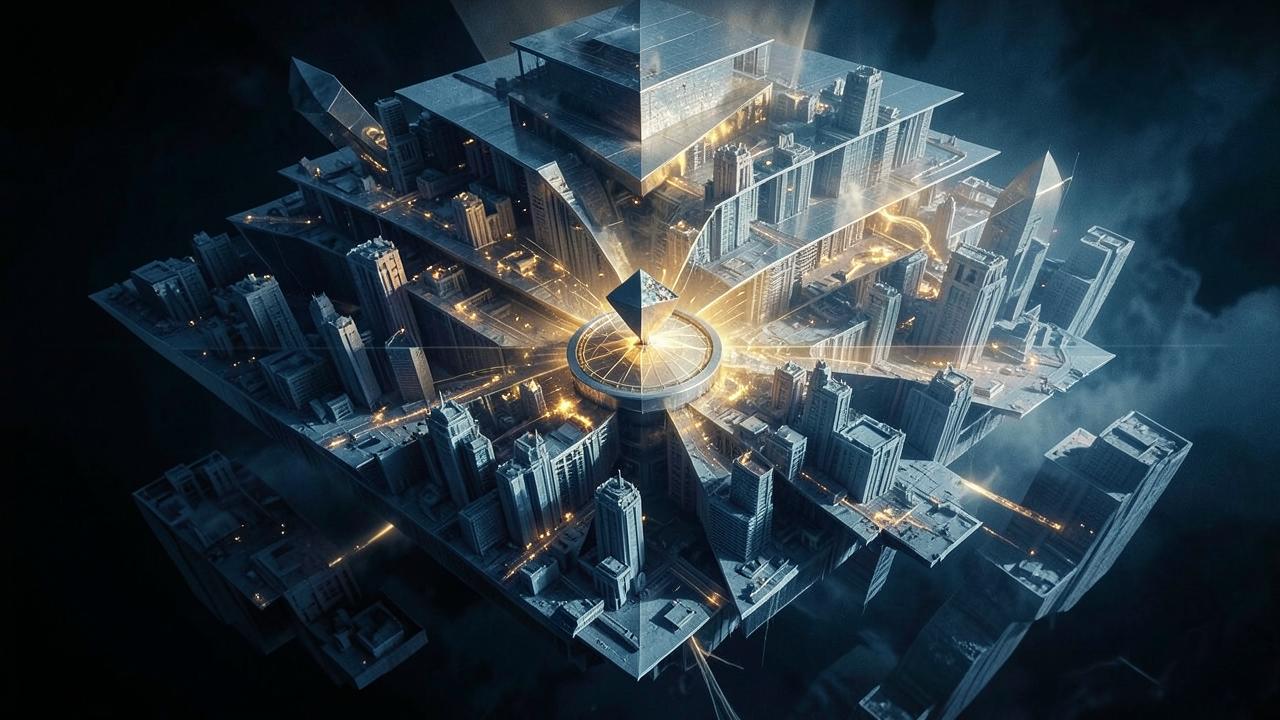
Inception
Reality, dreams and the architecture of the mind.
Films that influenced this film
- Destination Moon (1950)
Films influenced by this film
- Interstellar (2014)
- Gravity (2013)
- Arrival (2016)
- Solaris (1972)
Music
Soundtrack
Also sprach Zarathustra
Richard Strauss
Where it appears
The dawn of man and the star child
A fanfare of human ascent.
The Blue Danube
Johann Strauss II
Where it appears
Space station docking
Waltz rhythm turns orbital mechanics into dance.
Lux Aeterna
György Ligeti
Where it appears
Monolith appearances
Atonal choral dread that signals the unknown.
Spoilers ahead
The ending
Spoiler warning
This section reveals the ending and its possible meanings.
Easter eggs
Hidden details
Small discoveries most viewers miss on a first watch.
HAL's birthday
He becomes operational on 12 January 1992 in the novel; the film later adjusted this to 1992 in some prints.
The zero-gravity toilet
A deliberately mundane instruction manual contrasts with the cosmic grandeur.
The debate
Competing interpretations
The goal is not a correct answer — it's finding out which reading people find most convincing.
FilmAbouts interpretation
0%
Community
What do you think the film is about?
Ranked automatically by community agreement.
Log in to add your own interpretation.