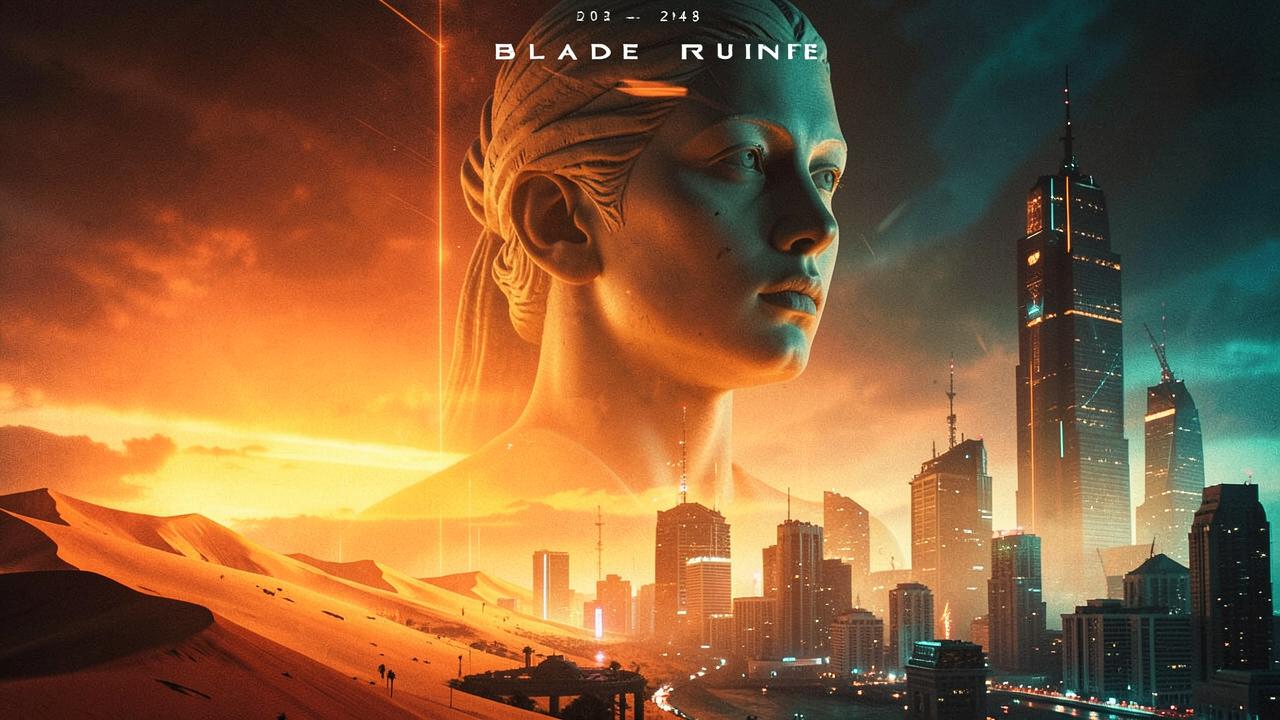
The central question
What is this film about?
Blade Runner 2049 asks what kind of soul can be manufactured. K believes he is a machine with implanted memories, then briefly believes he may be born — and finally accepts that he is still a machine, but one capable of choosing meaning.
The film's Los Angeles is a world where nature has been replaced by simulation: holographic lovers, synthetic farms, artificial bees. In that world, Joi's love for K may be programmed, but his grief when she is destroyed is real.
Villeneuve makes the search for Deckard feel like a religious quest. K crosses wastelands and ruins to find a father who denies him, then sacrifices himself so the real child can live free.
The central question is not whether replicants are human. It is whether a being that knows it was made can still choose to be more than its programming.
Editorial reading
Written by the FilmAbouts editors. It is one reading among many — the community decides how convincing it is.
Do you agree?
0% agree · 100% disagree
Visual language
Symbols & visual language
Recurring elements, where they appear, and what they might mean.
Snow
Represents
Purity, mortality, a quiet end.
Where it appears
Falls during K's final moments and the reunion.
A manufactured world can still produce a beautiful, natural death.
The holographic Joi
Represents
Idealised love, consumer product, or genuine companion.
Where it appears
K's apartment and the giant billboard.
The film refuses to settle whether Joi loved K; what matters is that K believed it and acted on it.
The wooden horse
Represents
Memory, childhood, proof of being born.
Where it appears
K's buried memory and the orphanage.
The object is real even when the memory is implanted; it still carries emotional truth.
Cinematography
How the film looks
Orange · Cyan · Slate · Magenta
Roger Deakins paints with sodium-vapour orange, holographic cyan and ash-grey deserts.
- Dominant colours
- Orange, cyan, slate, magenta
- Lighting
- Sodium vapour, holographic glow, dust and haze
- Camera
- Wide vistas, intimate close-ups, slow reveals
- Composition
- Solitary figures dwarfed by architecture
- Aspect ratio
- 2.39:1
- Production design
- Miniatures, practical sets, tactile decay
- Recurring pattern
- Eyes, reflections, screens within screens
- Evolution
- Colour warms as K moves from LA to the orphanage and the snow
Lineage
What inspired the film?
Films, books, real events and culture that feed into it.
Connections
If you liked this film...
The Matrix
A constructed world and the search for authentic self.
Inception
Memory, identity and the question of what is real.
2001: A Space Odyssey
Human evolution and the tools we create.
Films that influenced this film
- Blade Runner (1982)
- Do Androids Dream of Electric Sheep? (1968)
Films influenced by this film
- Dune (2021)
- Alita: Battle Angel (2019)
Music
Soundtrack
Mesa
Hans Zimmer & Benjamin Wallfisch
Where it appears
The orphanage and desert approach
A booming, almost sacred drone that turns ruins into cathedrals.
Tears in the Rain
Hans Zimmer & Benjamin Wallfisch
Where it appears
K's death
A reprise of the original film's most famous meditation on memory.
Spoilers ahead
The ending
Spoiler warning
This section reveals the ending and its possible meanings.
Easter eggs
Hidden details
Small discoveries most viewers miss on a first watch.
The Wallace headquarters floor
Designed as a reflective pool so characters appear to walk on water, visually deifying Wallace.
K's serial number
KD6-3.7 is stamped on his bones, literalising the idea that identity can be carved into the body.
The debate
Competing interpretations
The goal is not a correct answer — it's finding out which reading people find most convincing.
FilmAbouts interpretation
0%
Community
What do you think the film is about?
Ranked automatically by community agreement.
Log in to add your own interpretation.