Thriller / Drama / Black comedy
Parasite
2019 · Bong Joon-ho
“A poor family infiltrates a wealthy household one job at a time — until the house reveals a secret that turns the scheme upside down.”
The central question
What is this film about?
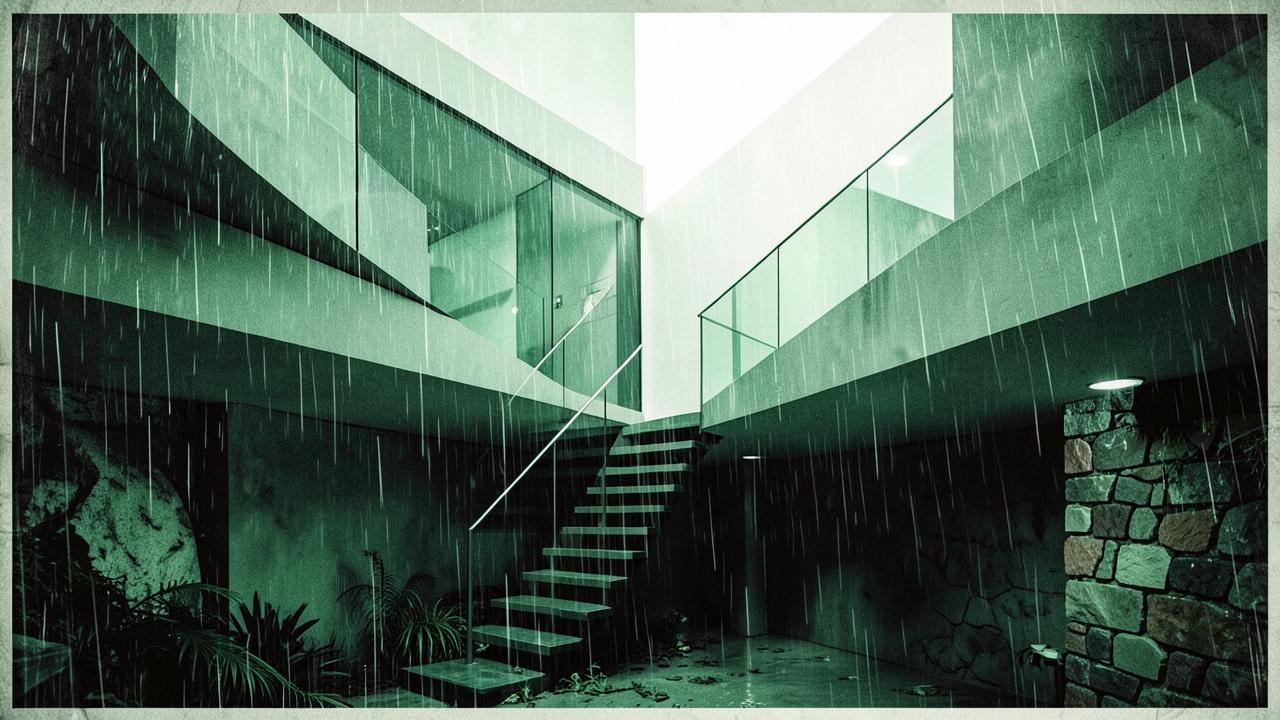
Parasite is a film about vertical space. The poor family lives in a semi-basement; the rich family floats above them in a glass house designed by a famous architect.
Bong Joon-ho turns the heist film into class warfare. The Kims are not simply victims; they are skilled, charming and ruthless. The Parks are not simply villains; they are naive, polite and oblivious.
The smell of poverty becomes a character. Mr Park mentions it without knowing he is describing human dignity being eroded. The rain that the Parks find romantic floods the Kims' home.
The violence at the birthday party is not an accident. It is the moment the architecture of inequality collapses and the people it hid can no longer stay invisible.
Editorial reading
Written by the FilmAbouts editors. It is one reading among many — the community decides how convincing it is.
Do you agree?
0% agree · 100% disagree
Visual language
Symbols & visual language
Recurring elements, where they appear, and what they might mean.
Stairs
Represents
Class mobility, or the impossibility of it.
Where it appears
Every transition between the Kim and Park homes involves stairs.
Going up is possible; staying up is not.
The scholar's rock
Represents
Wealth, luck and the weight of aspiration.
Where it appears
Given to the Kims as a good-luck charm.
It is beautiful, useless, and nearly kills them — like the dream of wealth itself.
The rain
Represents
Class perspective.
Where it appears
A cleansing storm for the Parks, a disaster for the Kims.
The same event is experienced completely differently depending on where you live.
Cinematography
How the film looks
Concrete grey · Pale wood · Green · Stone
Clean modernist lines for the Park house, cramped clutter for the Kim flat, and a hidden basement that feels like a tomb.
- Dominant colours
- Concrete grey, pale wood, green, stone
- Lighting
- Natural daylight in the Park home, dim fluorescence in the Kim flat
- Camera
- Smooth horizontal tracking and vertical descents
- Composition
- Thresholds, staircases, layered space
- Aspect ratio
- 1.85:1
- Production design
- A built set that blurs interior and exterior, rich and poor
- Recurring pattern
- Characters crossing from one class space to another
- Evolution
- The house literally floods and reveals its buried class secret
Lineage
What inspired the film?
Films, books, real events and culture that feed into it.
Connections
If you liked this film...
Get Out
A social ritual hides a violent conspiracy.
The Godfather
Family ambition and moral compromise.
Fight Club
The hidden underclass surfaces through organised violence.
Films that influenced this film
- The Housemaid (1960)
- Snowpiercer (2013)
Films influenced by this film
- Triangle of Sadness (2022)
- The Menu (2022)
Music
Soundtrack
The Belt of Faith
Jung Jae-il
Where it appears
Climax at the garden party
A solemn, almost ceremonial cue that turns violence into tragedy.
Zappaguri
Jung Jae-il
Where it appears
Family dinner montage
Playful music that mocks the Kims' confidence before the fall.
Spoilers ahead
The ending
Spoiler warning
This section reveals the ending and its possible meanings.
Easter eggs
Hidden details
Small discoveries most viewers miss on a first watch.
The architect's window
The Park house was built on a soundstage; the garden and sky were digital extensions of a real set.
The peach fuzz
Mrs Park's allergy becomes the Kims' weapon, and a symbol of the body's own class signals.
The debate
Competing interpretations
The goal is not a correct answer — it's finding out which reading people find most convincing.
FilmAbouts interpretation
0%
Community
What do you think the film is about?
Ranked automatically by community agreement.
Log in to add your own interpretation.