The central question
What is this film about?
The Godfather is a tragedy about the American Dream curdling inside one family. Michael Corleone begins as the son who wants a legitimate life and ends as the most ruthless Don.
The film makes power look like duty. Every murder Michael commits is framed as protection of the family, yet each one costs him a piece of the family he claims to defend.
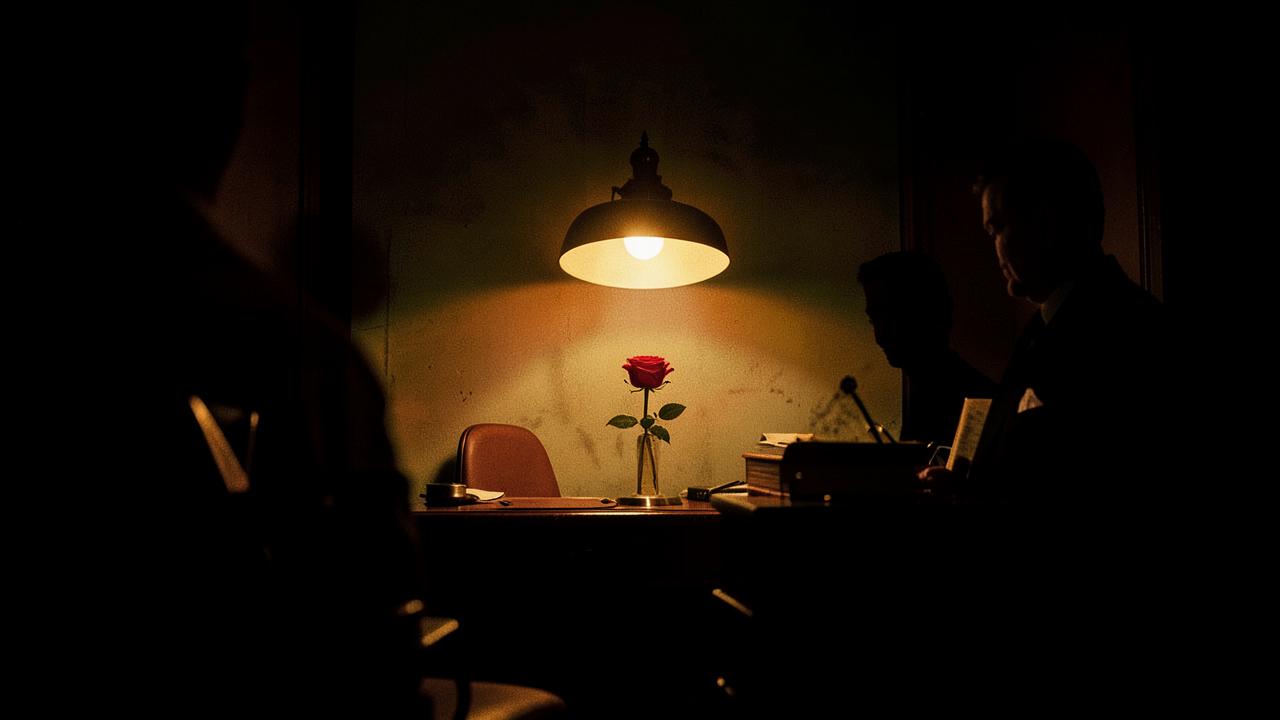
Coppola shoots the Corleones in warm amber light and frames them like royalty at dinner, funerals and baptisms. The visual warmth makes the moral coldness more disturbing.
By the final shot, Michael has lied to his wife, ordered the death of his brother-in-law, and closed the door on her. The door is the real ending: he has chosen isolation in exchange for control.
Editorial reading
Written by the FilmAbouts editors. It is one reading among many — the community decides how convincing it is.
Do you agree?
0% agree · 100% disagree
Visual language
Symbols & visual language
Recurring elements, where they appear, and what they might mean.
Oranges
Represents
Death, fate, the fragility of life.
Where it appears
Appear before or during violent deaths throughout the film.
A visual omen that the American abundance the family enjoys is always paid for in blood.
The closing door
Represents
Separation, the final choice for power over intimacy.
Where it appears
Final shot between Michael and Kay.
Michael chooses the family business over the family itself.
The baptism
Represents
Spiritual cleansing performed while ordering murder.
Where it appears
The climax intercuts the church ceremony with assassinations.
Michael's public innocence and private guilt are now one.
Cinematography
How the film looks
Amber · Black · Olive · Crimson
Gordon Willis's shadows swallow half the frame. Warm interiors contrast with cold public spaces.
- Dominant colours
- Amber, black, olive, crimson
- Lighting
- Deep shadows, top lighting, candlelit interiors
- Camera
- Slow, deliberate movements, respectful of power
- Composition
- Group tableaux, royal framing
- Aspect ratio
- 1.85:1
- Production design
- Dark wood, Sicilian textures, mid-century wealth
- Recurring pattern
- Faces half-lit in moral twilight
- Evolution
- Shadows deepen as Michael takes control
Lineage
What inspired the film?
Films, books, real events and culture that feed into it.
Connections
If you liked this film...
Pulp Fiction
Crime as a web of moral choices.
Parasite
Family ambition curdling into violence.
Fight Club
A man discovers the darkness he is capable of.
Films that influenced this film
- On the Waterfront (1954)
- The Public Enemy (1931)
Films influenced by this film
- Goodfellas (1990)
- The Sopranos (1999)
- Scarface (1983)
Music
Soundtrack
Speak Softly, Love
Nino Rota
Where it appears
Opening wedding / recurring theme
A romantic melody that becomes the sound of inherited violence.
The Godfather Waltz
Nino Rota
Where it appears
Don Corleone's theme
Old-world elegance masking old-world ruthlessness.
Spoilers ahead
The ending
Spoiler warning
This section reveals the ending and its possible meanings.
Easter eggs
Hidden details
Small discoveries most viewers miss on a first watch.
The cat in the opening scene
Was not scripted; Brando found it on set. Its purring made the opening threat feel almost domestic.
No red in the first scenes
Coppola and Willis controlled colour so that red intensifies as violence does.
The debate
Competing interpretations
The goal is not a correct answer — it's finding out which reading people find most convincing.
FilmAbouts interpretation
0%
Community
What do you think the film is about?
Ranked automatically by community agreement.
Log in to add your own interpretation.