
The central question
What is this film about?
At its core, Andrei Tarkovsky’s Stalker is a metaphysical pilgrimage disguised as science fiction. It posits that the journey toward faith is more significant than its destination. The film follows three men—a cynical Writer, a rationalist Professor, and their spiritual guide, the Stalker—into the Zone, a mysterious landscape where a Room supposedly grants one’s innermost wish. However, the Zone functions less as a magical territory and more as a spiritual crucible. It strips away the men’s intellectual and social pretenses, forcing them to confront the profound emptiness, cynicism, and desperate hope that propelled their quest in the first place.
Tarkovsky's signature long takes and slow, hypnotic camera movements are essential to conveying this spiritual crisis. The deliberate pacing forces the viewer into the same contemplative, anxious state as the characters, turning the act of watching into a meditative experience. The stark visual shift—from a bleak, sepia-toned monochrome in the industrial world to the super-saturated, vital greens of the Zone—externalizes the film's central dichotomy: the spiritually dead reality versus a world pregnant with meaning, mystery, and danger. The ambient soundscape, blending nature with Eduard Artemyev's ethereal score, transforms the ruined landscape into a cathedral of the uncanny.
A frequent misreading of Stalker is to approach it as a conventional science-fiction film, expecting clear rules, external conflict, and a tangible climax. This perspective inevitably leads to frustration with the film’s ambiguity and lack of resolution. The ‘traps’ of the Zone are not physical puzzles to be solved but psychological and spiritual provocations. The film actively subverts genre expectations to argue that the desire for a simple answer or a magical solution is itself a symptom of spiritual decay. The Room is not a prize to be won but a mirror that the characters ultimately fear looking into.
A quieter, alternative reading views Stalker as an allegory for the crisis of the Soviet intelligentsia. The Writer and the Professor embody two sides of intellectual despair: one lost in cynical artistry, the other in pragmatic nihilism. They are paralyzed, able to articulate their spiritual void but incapable of the leap of faith needed to overcome it. The Stalker, by contrast, is a ‘holy fool,’ a figure whose desperate, unyielding faith is a necessary survival mechanism in a bleak, oppressive world. The film’s ultimate grace may lie not with him, but with his wife and child, whose love represents a different, more powerful kind of faith.
Editorial reading
Written by the FilmAbouts editors. It is one reading among many — the community decides how convincing it is.
Do you agree?
0% agree · 100% disagree
Visual language
Symbols & visual language
Recurring elements, where they appear, and what they might mean.
The Zone
Represents
Faith, the subconscious, the divine, the unknown
Where it appears
The majority of the film, after the characters cross the initial boundary.
The Zone is a space where the laws of physics are superseded by the state of one's soul. It is a living, breathing entity that tests the faith and motivations of all who enter.
Water
Represents
Life, purity, memory, time, dissolution
Where it appears
Constantly throughout the Zone as rain, puddles, streams, and dampness.
Water in the Zone both purifies and erodes, a medium that cleanses while also holding submerged artifacts of a forgotten past. It reflects the characters' fluid and murky inner worlds.
The Room
Represents
Innermost desire, self-knowledge, a spiritual shortcut, God
Where it appears
At the destination of the journey, though its interior is never shown.
The Room is less a physical place than a concept that forces one to confront the truth of their own desires. The characters' failure to enter suggests the goal is ultimately a mirror of the self.
The Dog
Represents
Intuition, primal faith, companionship, grace
Where it appears
Midway through the Zone, it begins following the men and leaves with the Stalker.
The black dog acts as a silent, instinctual guide, a counterpoint to the men's tortured intellectualism. It represents a simple, non-judgmental form of faith and companionship that they lack.
Cinematography
How the film looks
Industrial Sepia · Verdant Moss · Murky Teal · Concrete Grey · Damp Earth
The film’s palette is bisected into two distinct worlds. Reality is rendered in a sickly, desaturated sepia brown, signifying a world of spiritual exhaustion, while the Zone is depicted in lush, almost supernatural greens and rich earth tones, suggesting a place of mysterious life.
- Dominant colours
- Sepia monochrome, deep greens, earthy browns, slate greys.
- Lighting
- Primarily soft, overcast, natural light in the Zone; contrasted with harsh, expressionistic lighting in the sepia-toned 'real world'.
- Camera
- Extremely long takes combined with slow, deliberate tracking, panning, and zooming movements that create a hypnotic, meditative rhythm.
- Composition
- Meticulously arranged, painterly frames with deep focus, often dwarfing the characters within vast, decaying landscapes or intricate natural settings.
- Aspect ratio
- 1.37 : 1
- Production design
- A palpable sense of decay, juxtaposing derelict industrial ruins—power plants, military vehicles—with an overwhelmingly wild and primordial nature.
- Recurring pattern
- Water in all its forms—drips, rain, pools, and flowing streams—often containing submerged, half-recognizable objects from a forgotten civilization.
- Evolution
- The film's look makes a stark, definitive shift from the sepia monochrome of the outside world to a vibrant, full-color palette upon the characters' entry into the Zone.
Lineage
What inspired the film?
Films, books, real events and culture that feed into it.
Book
Roadside Picnic (Arkady and Boris Strugatsky, 1972)
The film is a loose philosophical adaptation, retaining the core concept of the 'Zone' and a 'Stalker' but stripping away the novel's sci-fi action to focus on metaphysical questions.
Real event
The Chernobyl disaster (1986)
Though it predates the event, the film's imagery of a deadly, forbidden 'Zone' has made it uncannily prophetic and retrospectively linked it to the real-world catastrophe in the cultural imagination.
Culture
Eastern Orthodox Christianity
The film is suffused with Orthodox themes like the 'yurodivy' (holy fool), the importance of suffering, the nature of faith, and a pilgrimage structure, reflecting Tarkovsky's deep spiritual concerns.
Film
Andrei Rublev (Andrei Tarkovsky, 1966)
Stalker is a thematic continuation of Tarkovsky's earlier masterpiece, exploring an artist's (or guide's) crisis of faith and purpose in a fallen, cynical world.
Book
The Bible
The film contains direct and indirect biblical allusions, from passages quoted by the Stalker to themes of sacrifice, apocalypse, and the search for salvation in a faithless age.
Connections
If you liked this film...
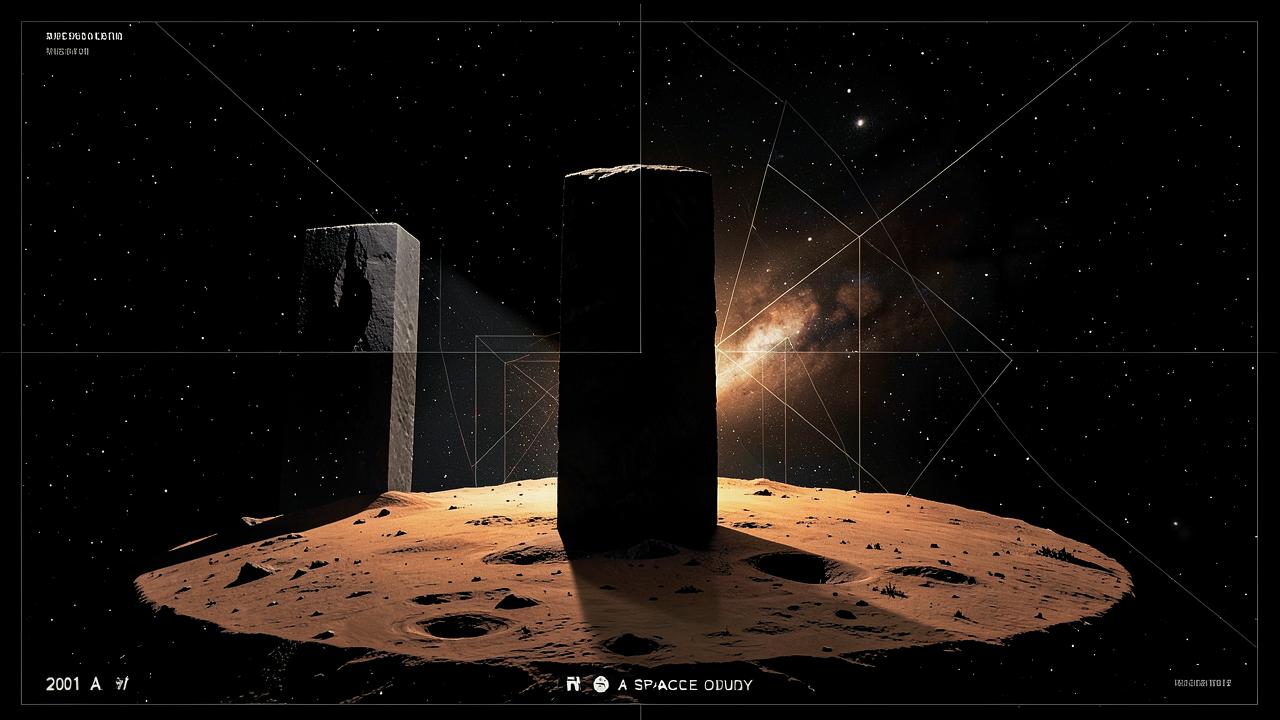
2001: A Space Odyssey
Both are seminal works of philosophical sci-fi that prioritize mood, visual poetry, and metaphysical questions over narrative convention, using a mysterious phenomenon to explore humanity's limits.

Apocalypse Now
Both films depict a Dantean journey into a dangerous, lawless territory that mirrors an internal descent into the darkest corners of the human psyche, blurring the line between sanity and madness.
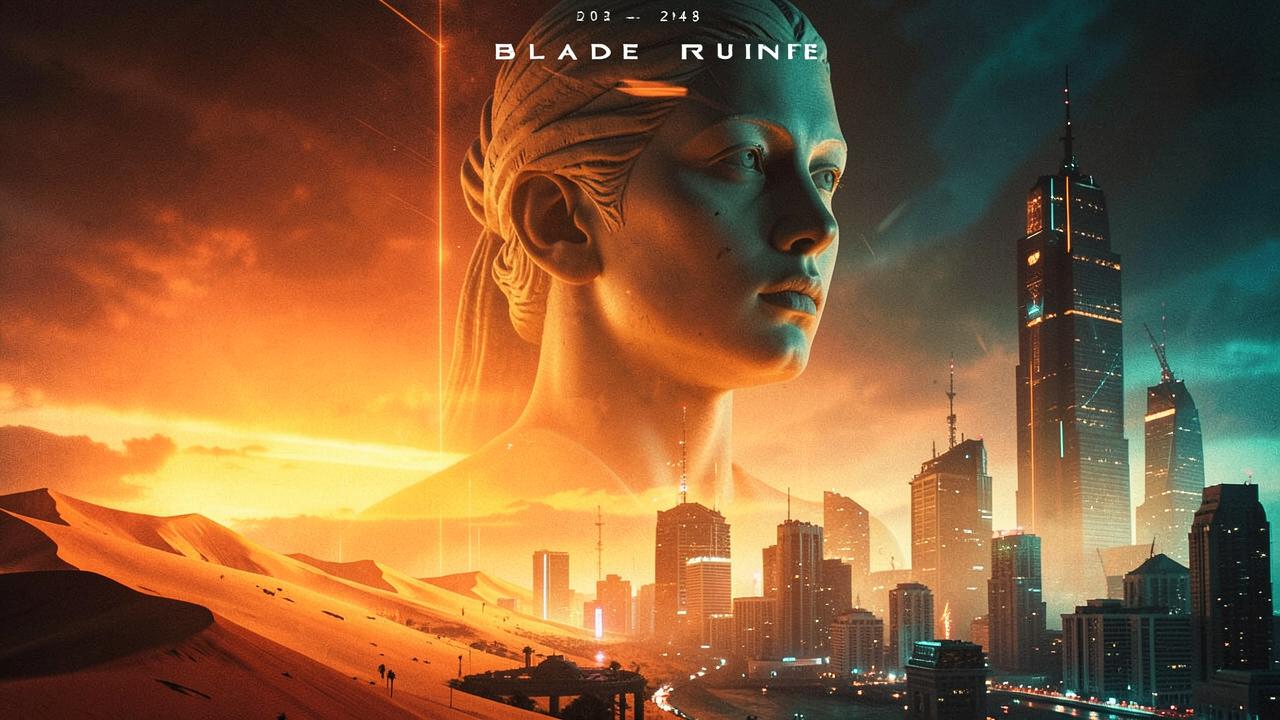
Blade Runner 2049
Shares a contemplative pace, a melancholy tone, and a visually stunning depiction of a decayed world, exploring profound questions about what constitutes a soul, memory, and a meaningful existence.
Films that influenced this film
- Andrei Rublev (1966)
- L'Avventura (1960)
- The Seventh Seal (1957)
Films influenced by this film
- Annihilation (2018)
- Chernobyl (2019)
- Under the Skin (2013)
Music
Soundtrack
Meditation
Eduard Artemyev
Where it appears
Over the opening credits and during the trolley ride into the Zone.
Artemyev’s main theme, blending a traditional Azerbaijani tar with otherworldly synthesizer tones, perfectly captures the film’s fusion of earthy, spiritual longing and science-fiction uncanniness.
Excerpt from Beethoven's 9th Symphony ('Ode to Joy')
Ludwig van Beethoven
Where it appears
Heard faintly on a radio in the final scene before the glass moves.
This iconic hymn to joy and brotherhood provides a poignant and deeply ironic counterpoint to the family's impoverished state, while simultaneously suggesting a transcendent humanism that persists.
Excerpt from Ravel's 'Boléro'
Maurice Ravel
Where it appears
A fragment is integrated into Artemyev's score.
The hypnotic, driving repetition of Ravel's music mirrors the obsessive, cyclical nature of the Stalker's journey and the trance-like, ritualistic quality of the film itself.
Laudate Dominum (from Vesperae solennes de confessore, K. 339)
Wolfgang Amadeus Mozart
Where it appears
A theme from the piece is quoted instrumentally by Artemyev's score.
The inclusion of this Western sacred music adds a layer of universal religious tradition, broadening the film's spiritual quest beyond its immediate Russian Orthodox context.
Spoilers ahead
The ending
Spoiler warning
This section reveals the ending and its possible meanings.
Easter eggs
Hidden details
Small discoveries most viewers miss on a first watch.
A Lost Film
Tarkovsky shot the entire film once, but the negative was improperly developed at the Mosfilm laboratory, destroying it. Viewing it as a sign of his initial failure, he re-shot the whole film with a new cinematographer and a revised script, resulting in the final masterpiece.
Toxic Location
The film was shot near a derelict chemical plant in Estonia, and the river was dangerously polluted with industrial waste. Many crew members, including Tarkovsky, his wife Larisa, and actor Anatoly Solonitsyn, later died of cancers attributed to this toxic exposure, making the Zone lethally real.
The Stalker's Name
Although the characters are known by their archetypes (Writer, Professor), the Stalker's actual name is Viktor. His wife uses it in her final monologue, and it is listed in the film's credits, subtly grounding his symbolic role in a human identity.
The Stray Dog
The black dog that appears in the Zone was reportedly a stray that wandered onto the set. Tarkovsky decided to incorporate the animal into the film and, after shooting was complete, adopted the dog and brought it back to Moscow with him.
The debate
Competing interpretations
The goal is not a correct answer — it's finding out which reading people find most convincing.
FilmAbouts interpretation
0%
Community
What do you think the film is about?
Ranked automatically by community agreement.
Log in to add your own interpretation.